EVENTS THAT
ENGAGE AND
SELL

An immersive virtual event platform that creates meaningful connections and drives sales.
Project Details
Company
Scoot — Immersive enterprise event platform
Role
Director of Product Design — Lead IC
Owned product strategy, design execution, and cross-functional decision making with founders
Business Model
B2B SaaS powering virtual events with measurable engagement and sales outcomes
Primary Focus
Activation, engagement, and enterprise adoption
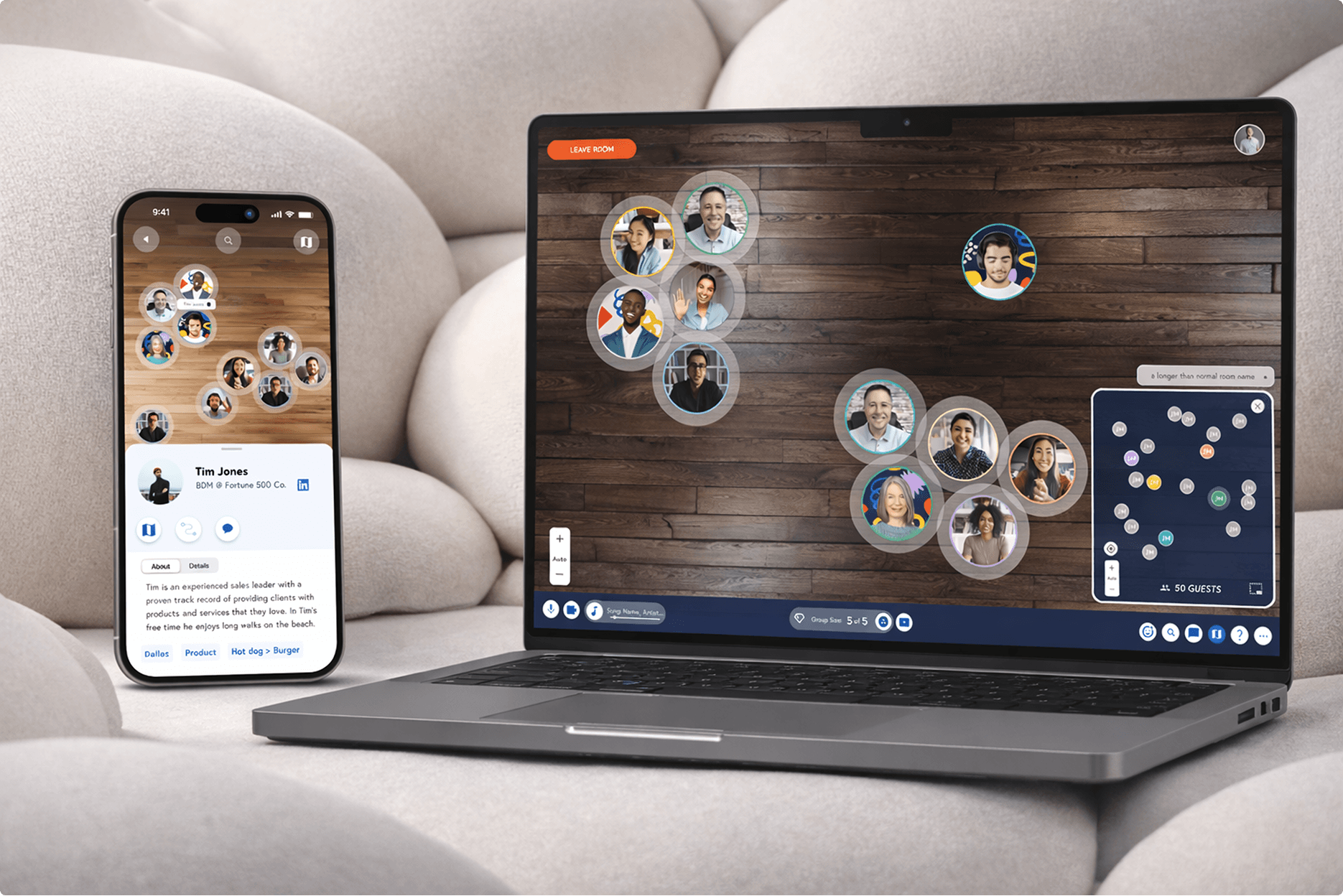
tl;dr
Scoot lacked a clear wedge in a crowded virtual events market. I partnered with founders to redefine the product around immersive engagement and actionable sales intelligence, re-architecting the platform across the full event lifecycle. During this period, monthly attendees grew 10x, mobile activation reached 95%, and the company closed its first Fortune 500 contracts for the sales use case.
The Problem
Virtual events had become interchangeable and low signal. Engagement was shallow, differentiation was weak, and sales teams left without actionable data. Without a defensible wedge, Scoot risked becoming another webinar tool in a crowded market.
The Opportunity
Through customer interviews, usage analysis, and competitive research, I identified the core constraint: the platform needed to generate both immersive engagement and usable revenue signal. The opportunity was to move beyond format and redesign the full event lifecycle to capture behavioral data before, during, and after live experiences.
The Results
I re-architected the product across the full event lifecycle, introducing registration infrastructure, pre- and post-event touchpoints, and AI-driven reporting workflows that transformed engagement data into actionable sales intelligence. These improvements resulted in the company's first sales-oriented Fortune 500 deals.
60→95%
Mobile Activation Improvement
10x
Monthly Attendee Growth
400+
Screens Designed
212
Components Built
Fostering connection and engagement through a rich game environment, and the insights it can create.
Strategic Decision: Based on the insight that agency drives engagement we shifted scope from incremental feature improvements to designing an immersive world model where users navigate and connect autonomously — anchoring product direction on behavioral agency instead of passive attendance.
Audiences
Three distinct user types require creating a dynamic real-time experience that takes a myriad of goals, needs and objectives into account.
01
Hosts / Producers
They are creating, managing, and executing every Scoot event. They want to make sure that a complex real-time event unfolds perfectly according to plan — no technical issues, confusion or bad experiences for their attendees.
02
Attendees
They're navigating a novel and unique immersive experience for the first time. Their time is valuable and it's imperative that they get something tangible from the event as well as have a pleasant experience.
03
Sales People
These folks want to get the most out of connecting and interacting with others during the event. They want to convert and leverage everything they can in Scoot to do so.
Closely embedded relationships with both Engineering and our Customers
The project began with understanding all of the background context, history and goals of the product and company. When I arrived, a barebones prototype of the product existed, but was not ready yet for the enterprise. I then progressed through UX and UI auditing, mapping customer and prospect needs, and roadmapping product initiatives needed to go to market over the course of the next 18 months.
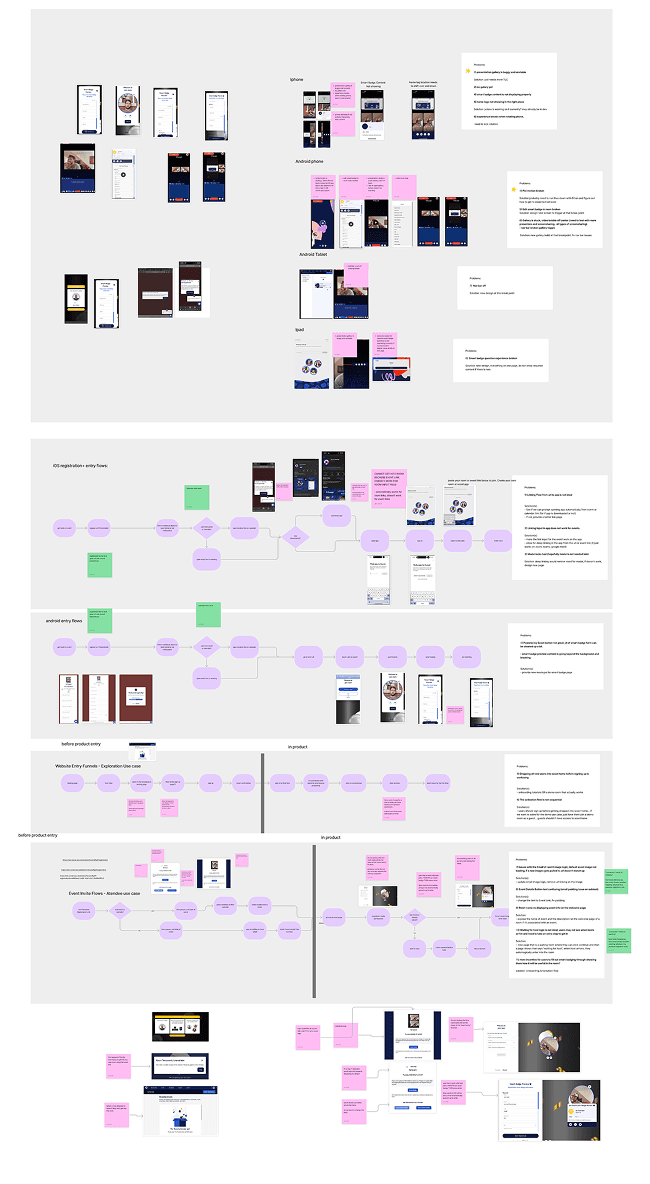
Audited the current onboarding and activation experience, documenting pain-points across platforms and devices, prioritizing and shipping solutions.
- •ID'd over 35 pain points through personal auditing and quantitatively through amplitude.
- •Categorized by severity and complexity
- •Designed solutions, prioritized implementation
- •Created tickets and handed off to engineering
- •Oversaw implementation to completion
- •Saw customer activation on mobile improve from 60 to 95%. Saw web-based first time activation increase by 20%
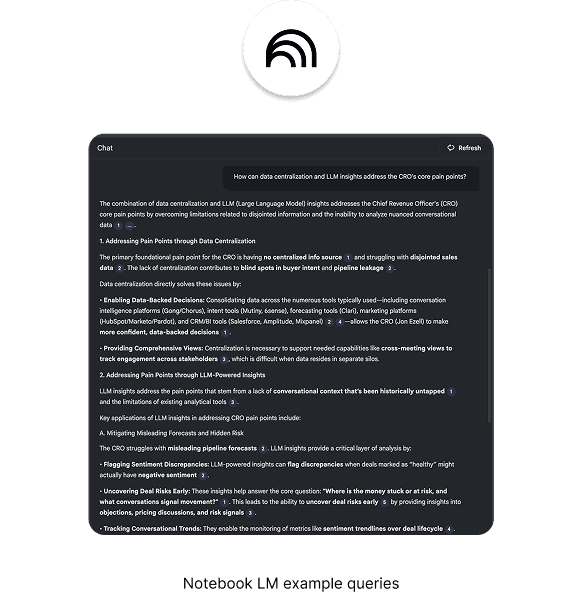
Developed a repo of sales and customer event and call recordings that I was able to query with Notebook LM to gain deep insights into customer pain points.
- •Over 100 customer calls and event transcriptions were eventually added into the folder
- •Was able to query, aggregate, and categorize frequency, and severity of all documented pain points.
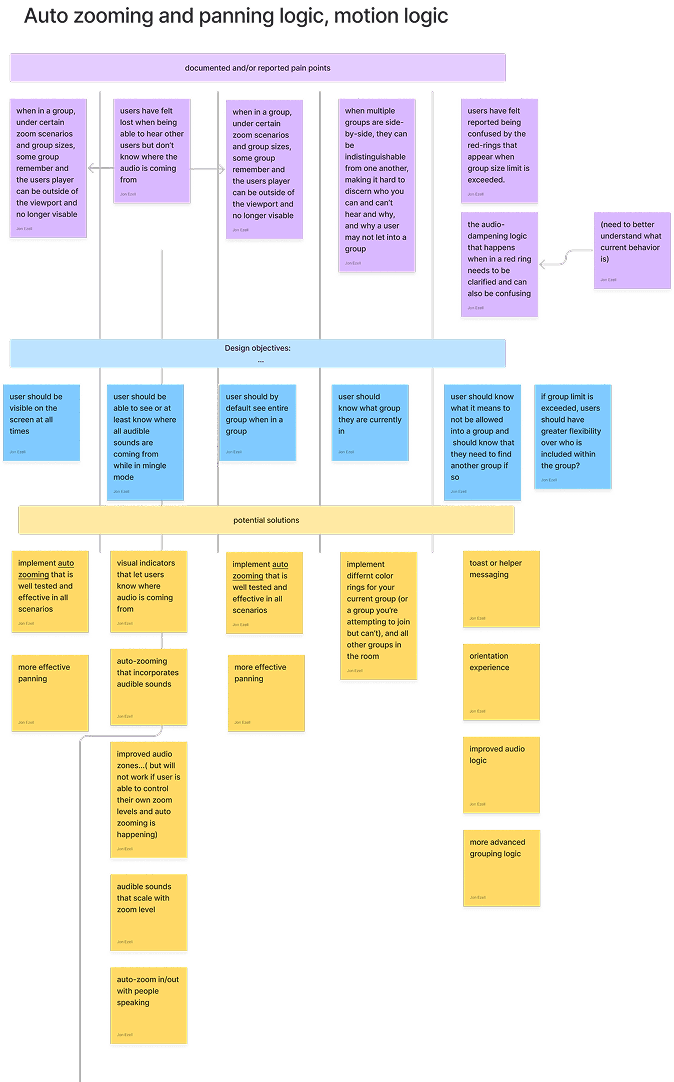
Researched and ID'd current pain points core to the game environment through both internal and external feedback
- •Analyzed all edge cases and error states that occurred in the game environment, and documented all unaddressed use cases.
- •Hypothesized solutions with the product team, and exec board
- •Validated solutions through interactive prototypes and mock ups.
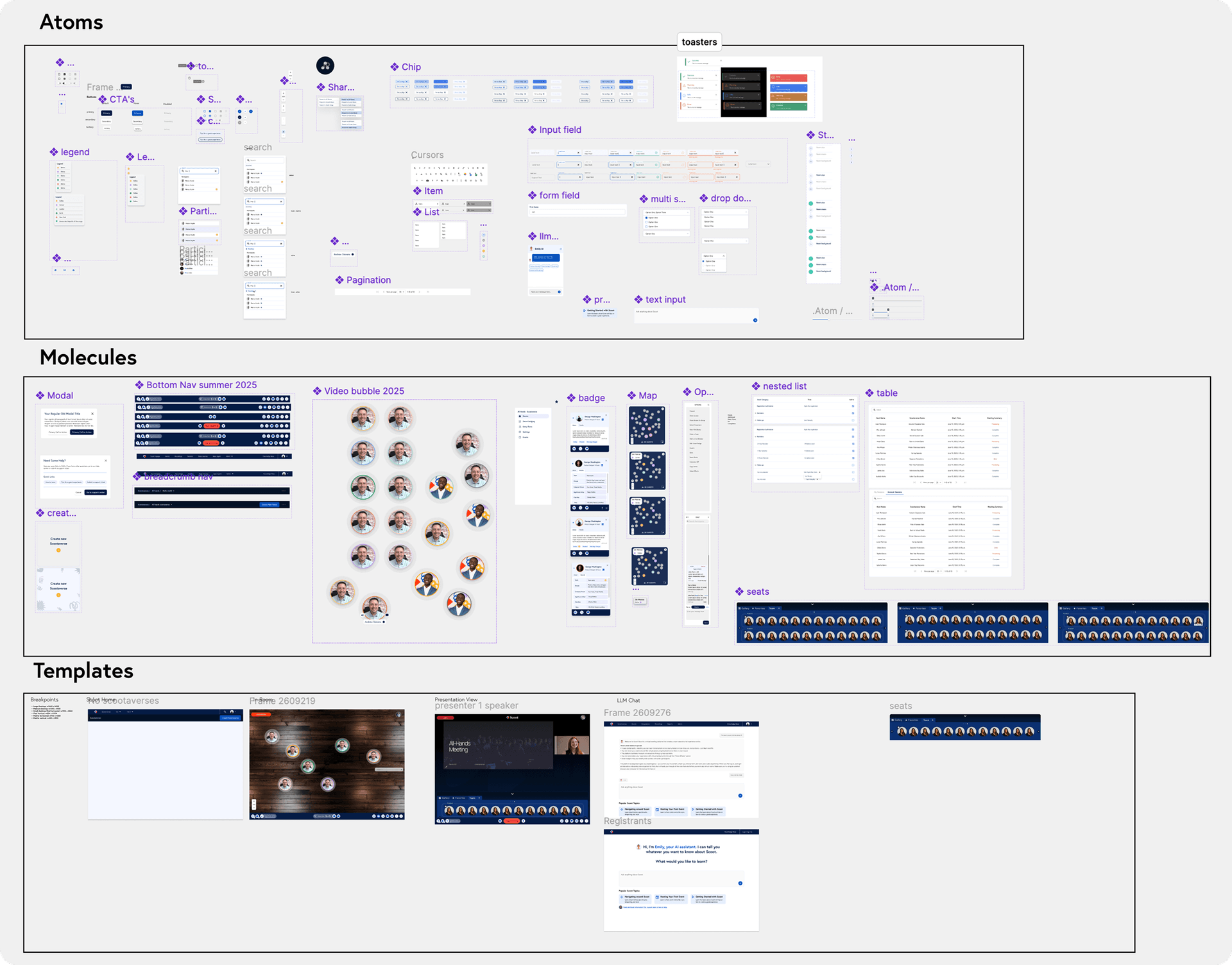
Created an actionable and extensible design system
- •Over 200 unique components, implemented consistent color, text, type, and primitive styling and usage across platforms and devices.
- •Collaborated with engineering leadership to integrate Storybook UI to ensure correct UI usage and implementation on the development side.
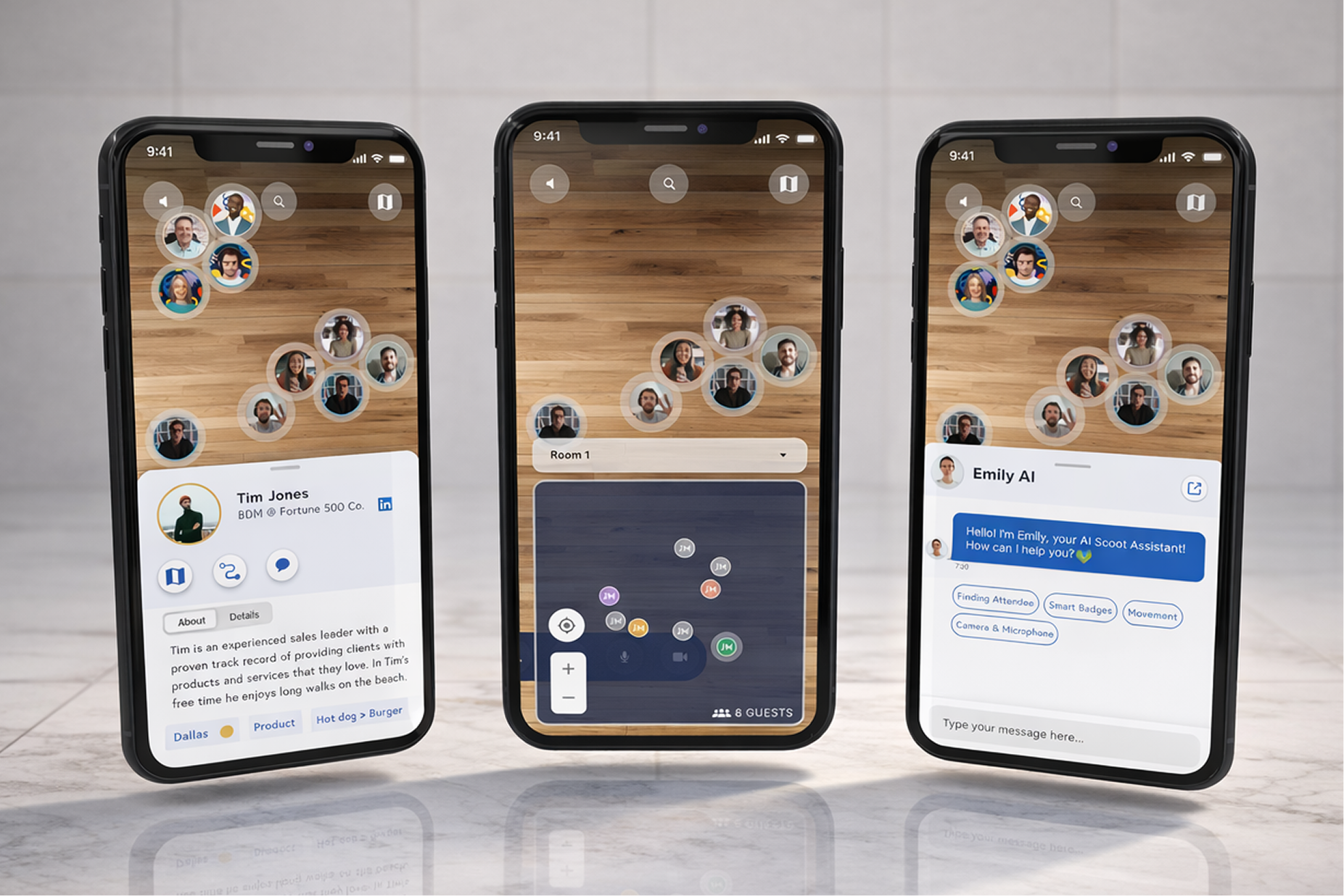
The solution wasn't a single feature — it was a set of coordinated system-level changes that reshaped participation, creation, and engagement across the entire event lifecycle.
Seamless mobile app parity with the Web based experience
Built a fully integrated mobile experience from a fragmented foundation, translating a complex multi-surface product into a cohesive mobile-first system. Applied iOS interaction patterns and platform-native behaviors to reduce cognitive load while maintaining feature parity with web — enabling scalable engagement beyond desktop environments.
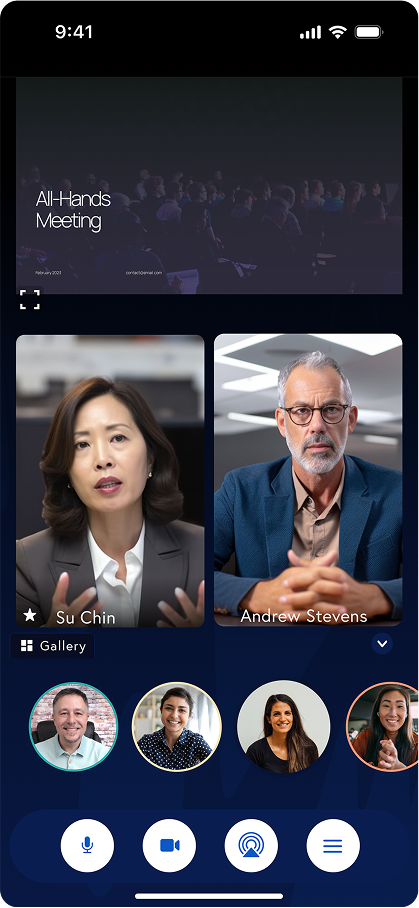
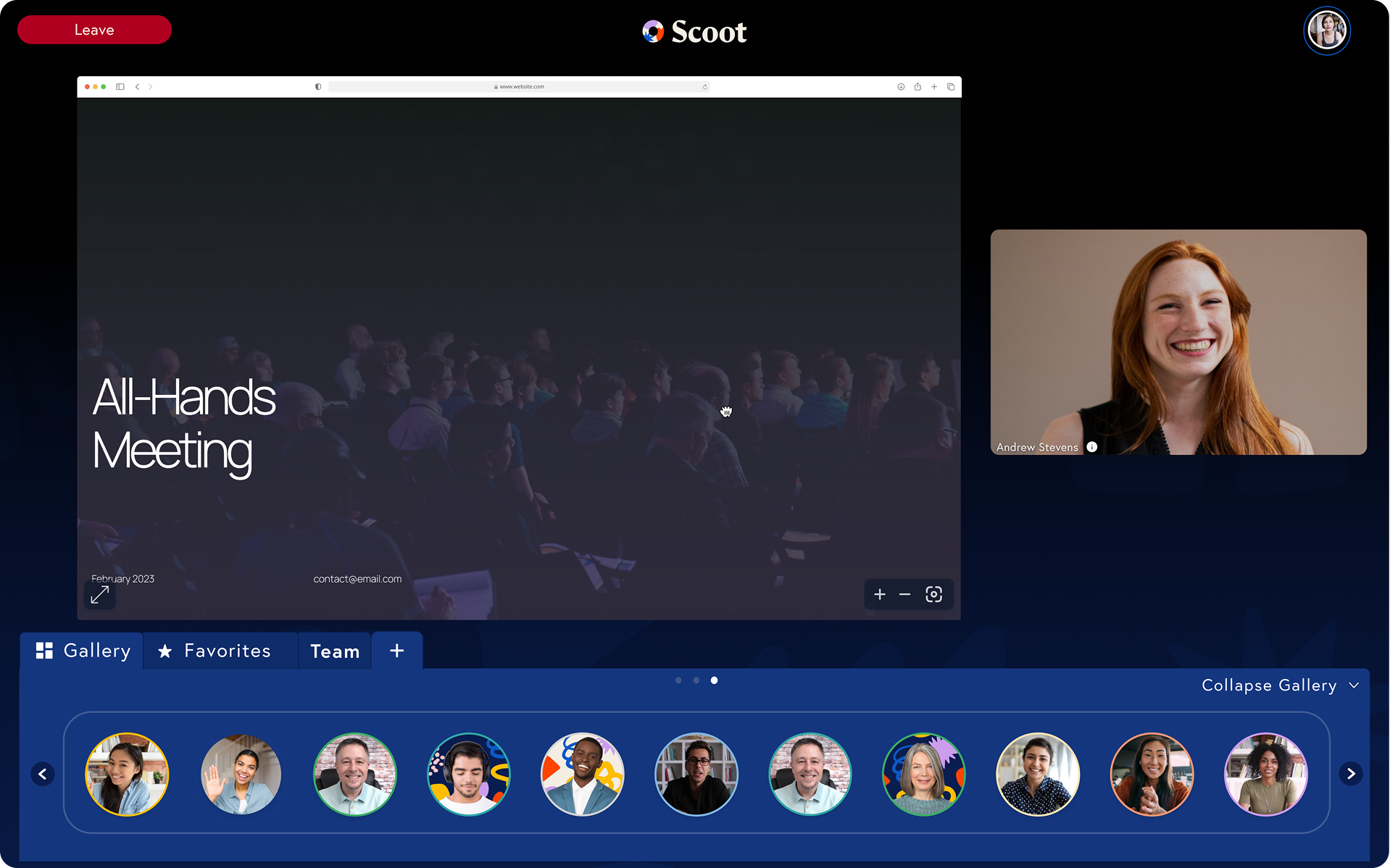
Presentation mode experience uniquely designed for engagement
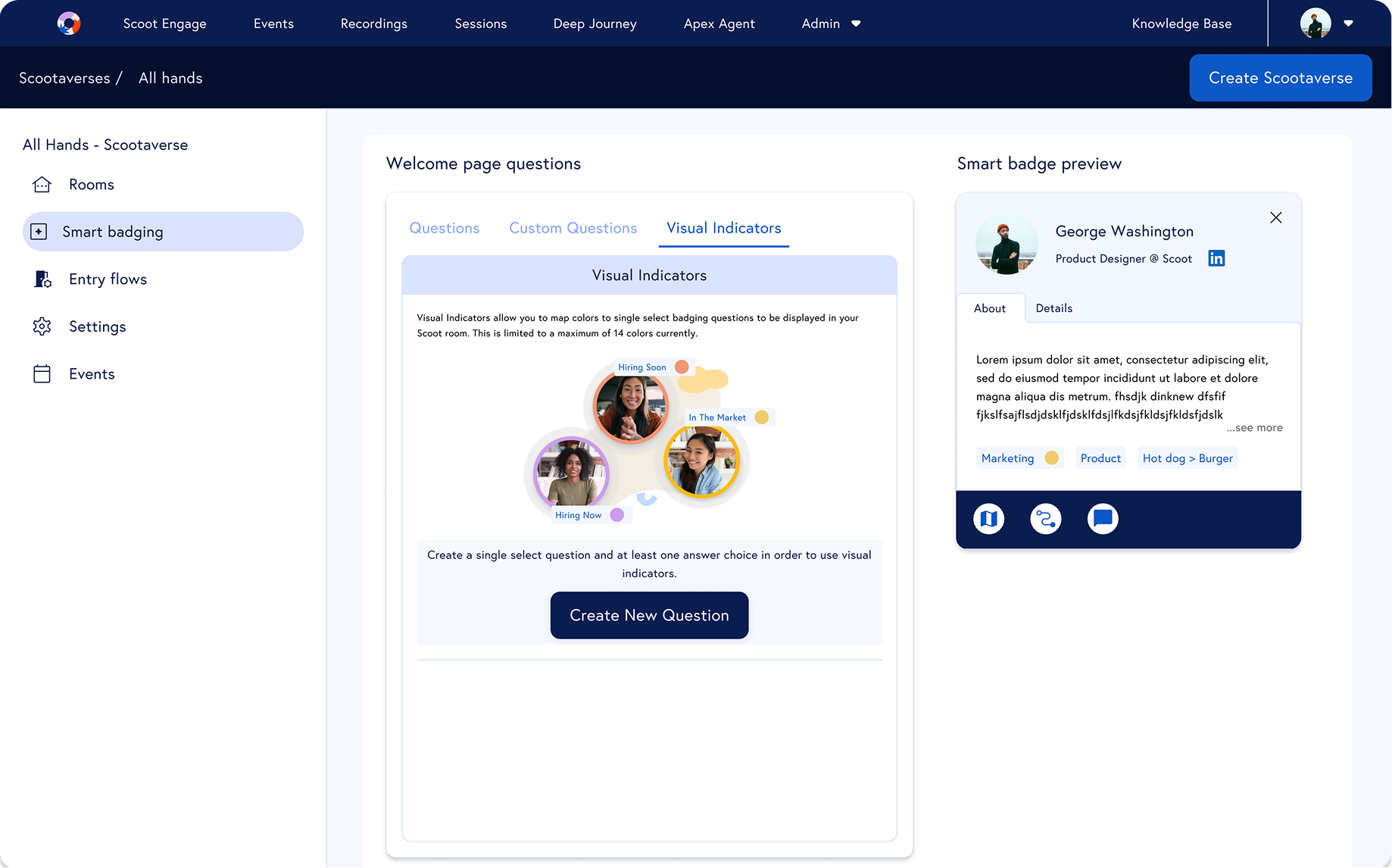
Redefined presentation mode from passive broadcasting into a socially-aware experience. Leveraged real-time behavioral signals and visual indicators to surface audience dynamics, enabling presenters to adapt in the moment and drive engagement beyond traditional webinar paradigms.
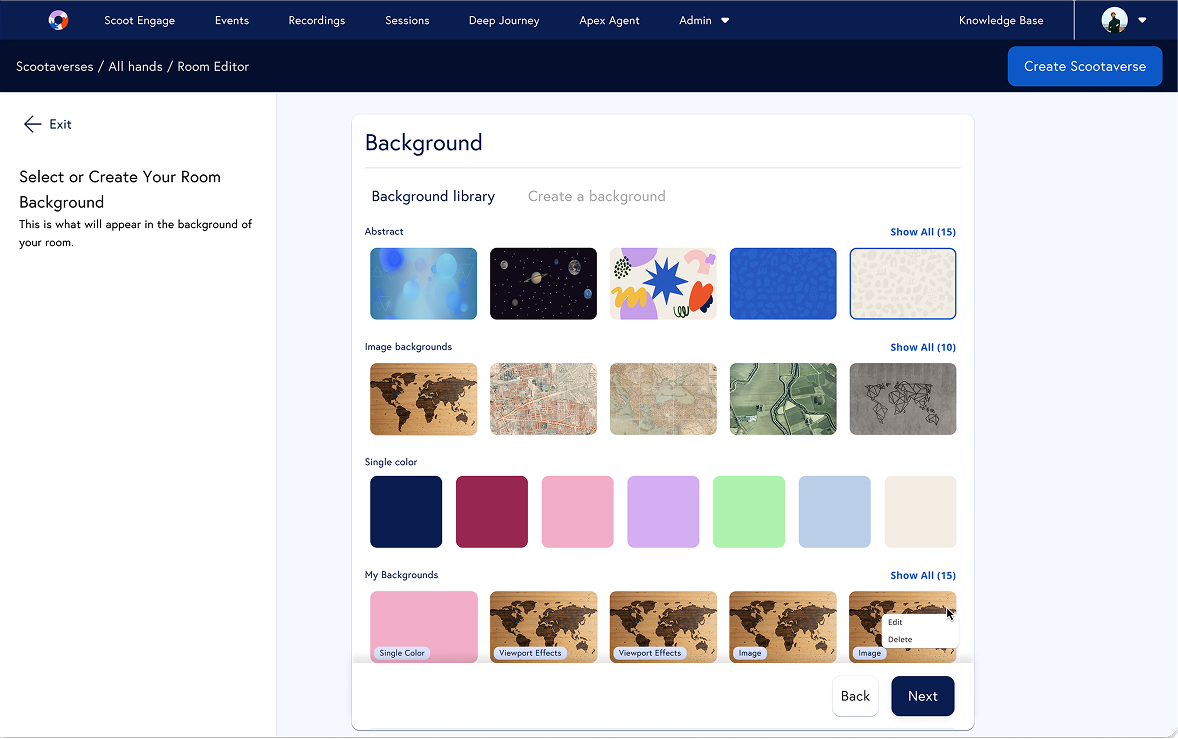
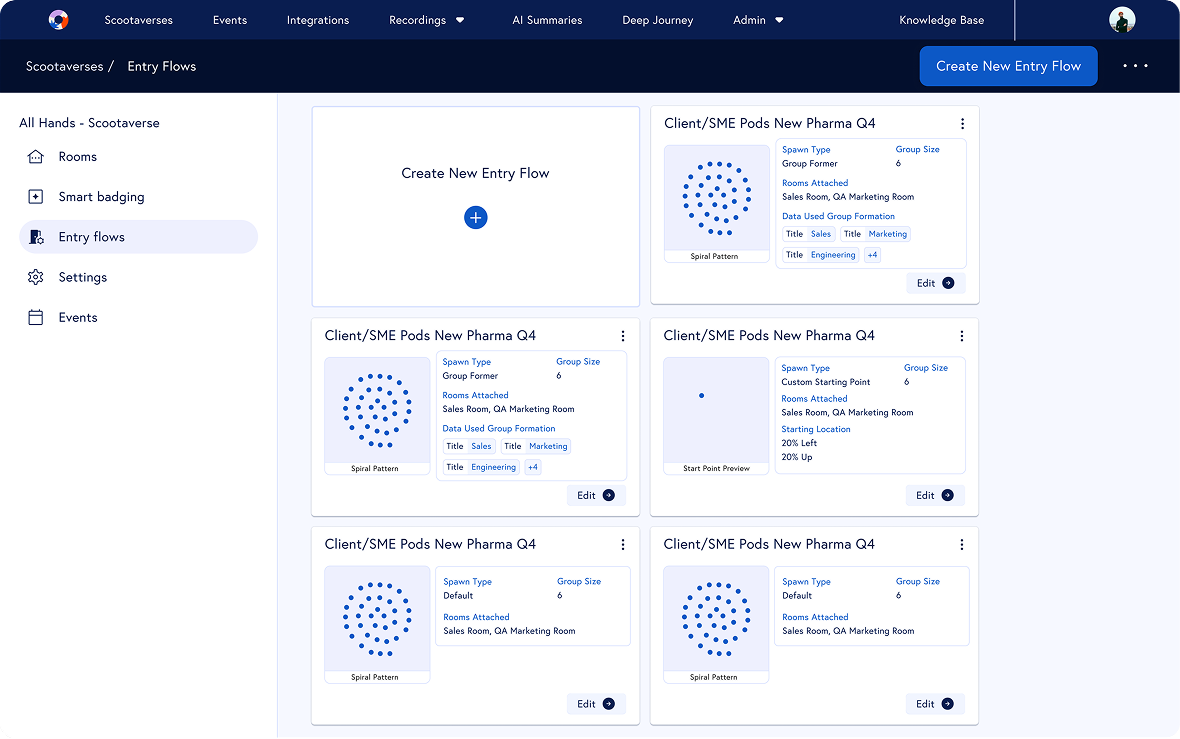
Room creation engine that empowers producers and simplifies a complex tool ecosystem
Designed a composable environment creation system that enabled non-technical organizers to build complex social spaces without engineering dependency. Abstracted technical complexity into intuitive controls, allowing scalable world-building through modular logic, interaction primitives, and behavioral structure.
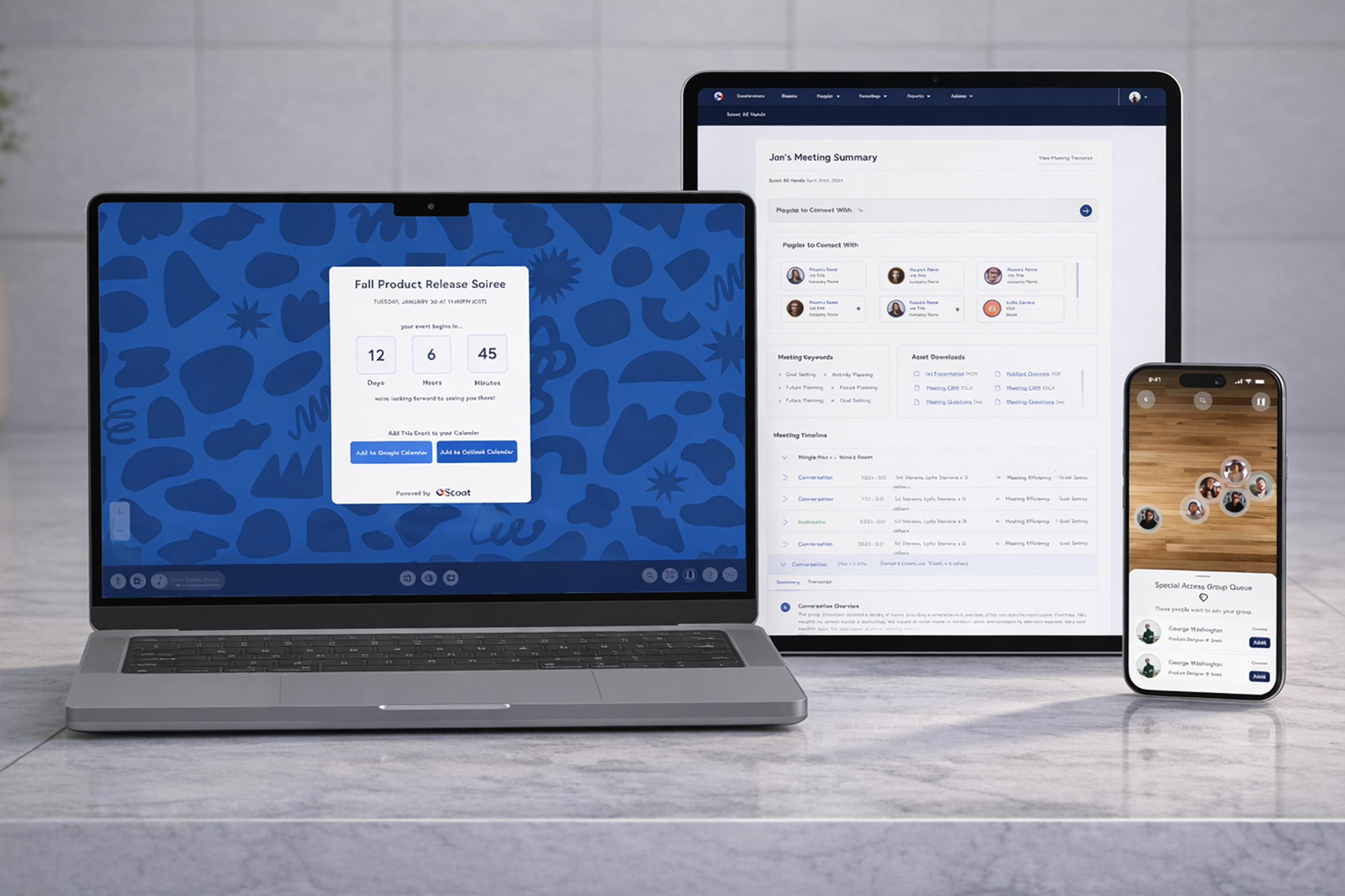
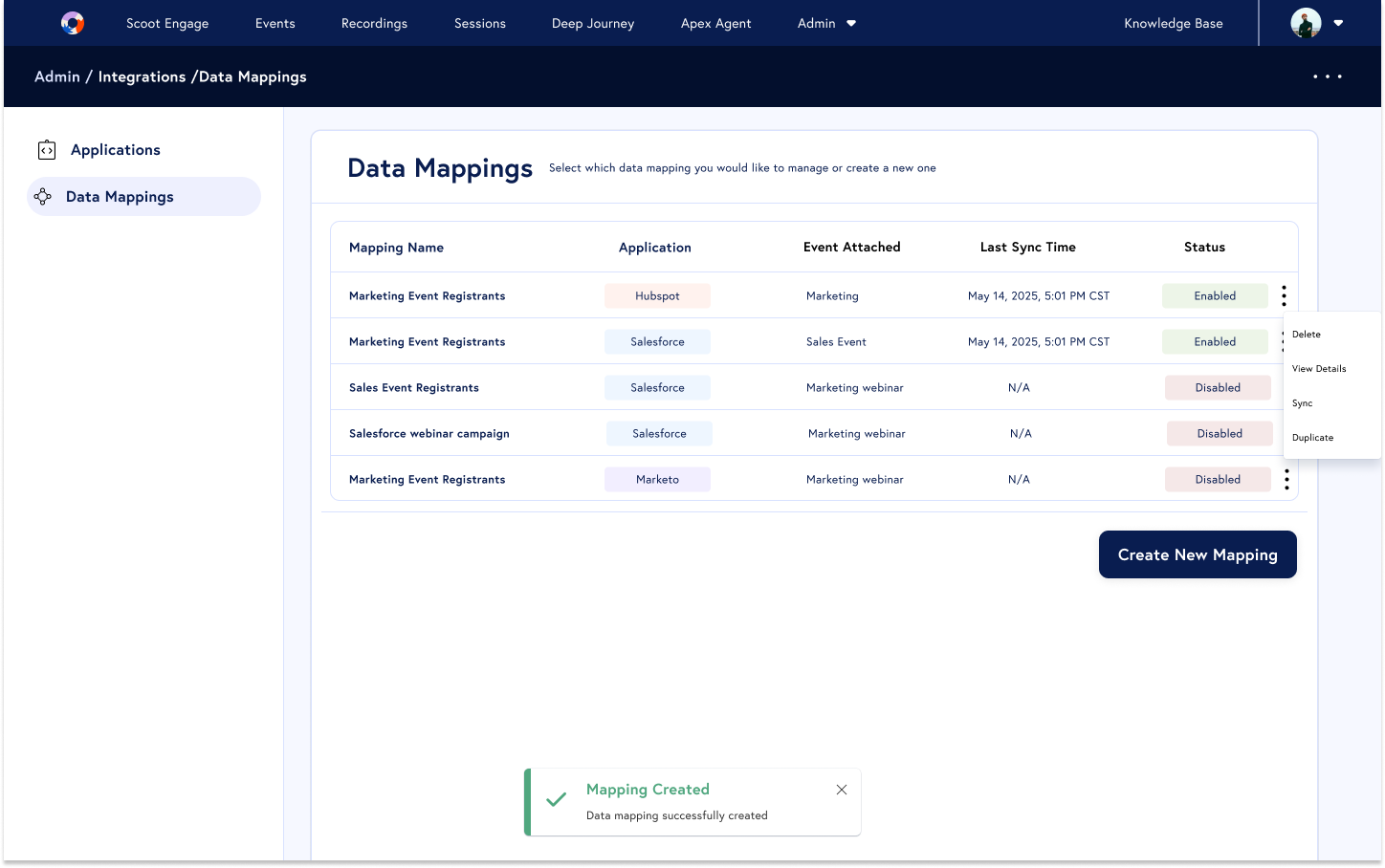
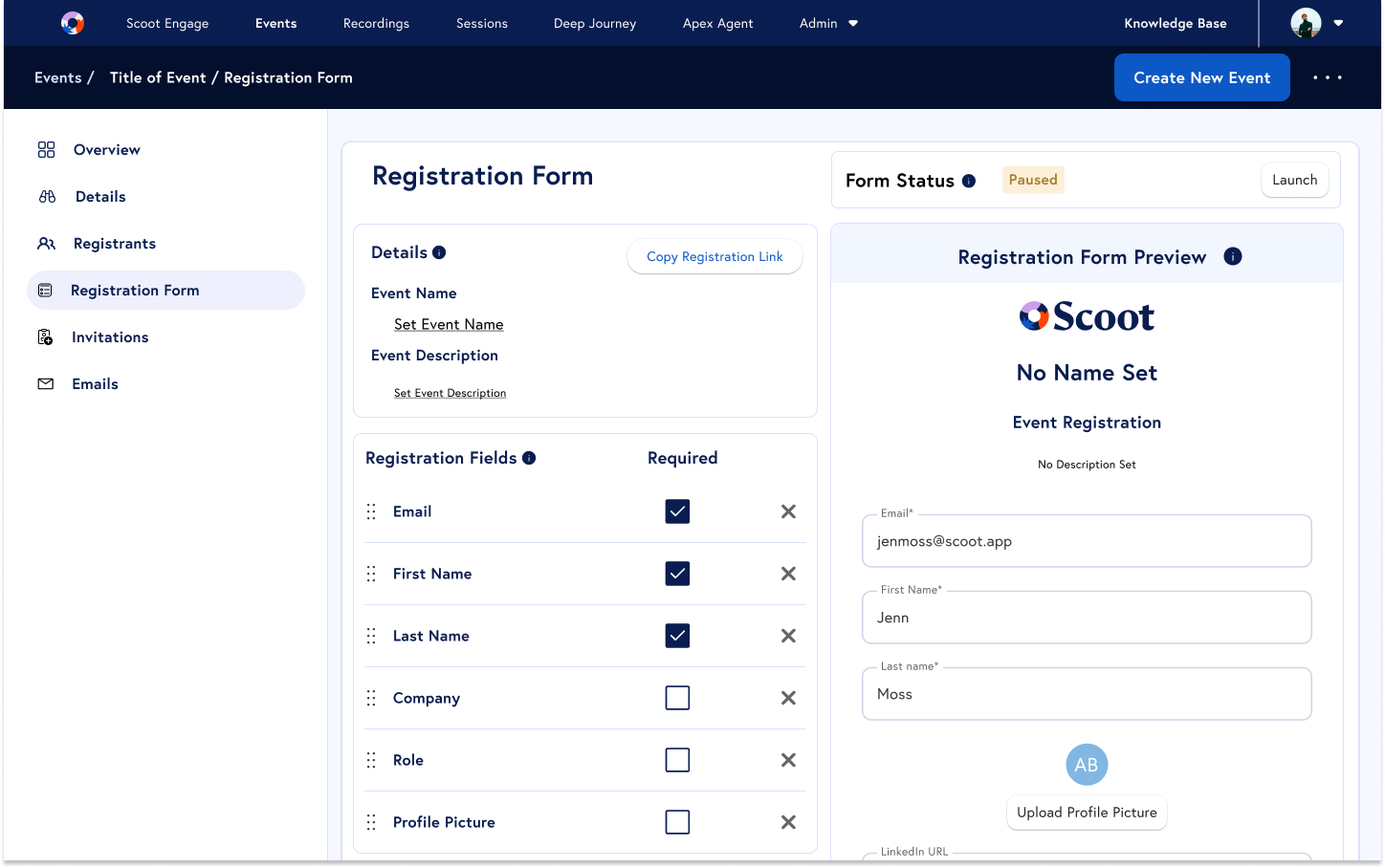
Before and after event infrastructure that makes attending both easy and actionable
Architected an end-to-end event lifecycle system connecting CRM data, user context, and post-event outcomes into a continuous feedback loop. Shifted the platform from isolated events to relationship-driven engagement by ensuring data flowed seamlessly before, during, and after experiences.
A complete, elegant and market-aligned experience
The redesigned platform enabled non-technical users to create and host large immersive events for the first time. This dramatically expanded who could run events on Scoot and contributed to 10× growth in monthly attendees.
The improved experience also unlocked a new sales enablement use case, helping organizations run immersive demos and leading to multiple Fortune 500 sales relationships.
Finally, improvements to onboarding and cross-device usability significantly reduced entry friction. Mobile activation increased to 95% and web activation improved by 20%.
Future Vision
The core social experience landed — post-event feedback consistently cited meaningful connections as the standout outcome. The next frontier is compounding that value with AI: embedding agents directly into the event flow to scale 1:1 engagement beyond what any human team can deliver, and converting the rich behavioral and conversational data generated during events into a strategic asset for revenue teams.
What I'd Do Differently
Looking back, I moved too quickly into high-fidelity on the mobile experience before fully stress-testing the information architecture across edge cases. We caught several structural issues late in development that required rework — a more rigorous low-fidelity phase would have surfaced them earlier and saved engineering cycles.
I'd also have pushed harder earlier for a formal usability testing cadence with real event attendees rather than relying primarily on internal feedback. The product was novel enough that our own team's familiarity with the experience consistently blinded us to first-time user confusion.

Designed & built with love in Figma + Cursor with Claude Code
© 2026 Jon Ezell. All rights reserved.